Be yourself; Everyone else is already taken.
— Oscar Wilde.
This is the first post on my new blog. I’m just getting this new blog going, so stay tuned for more. Subscribe below to get notified when I post new updates.
Be yourself; Everyone else is already taken.
— Oscar Wilde.
This is the first post on my new blog. I’m just getting this new blog going, so stay tuned for more. Subscribe below to get notified when I post new updates.
Regardless of whether you aren’t a specialist on vehicles, you can achieve most essential upkeep and fix take a shot at your own. Supplant a well used merchant top, for example, to keep up the vehicle’s electrical power. With a couple of fundamental instruments, the fuel channel and air sift are additionally simple to swap through to guarantee your vehicle keeps on running admirably. A fundamental toolbox and a workshop manual can get you far with regards to the soundness of your vehicle.
Strategy
1
Social affair Repair Resources and Documentation
Picture titled Repair Your Car Without Experience Step 1
1
Buy an exhaustive toolbox for essential vehicle fixes. Nothing is to a greater extent a torment than being elbow-somewhere down in oil and acknowledging you need a modest apparatus you don’t have. Some to and fro is inescapable with vehicle fixes, however assembling a couple of essential devices can anticipate a great deal of this. Attachment torques, screwdrivers, torques, pincers, jacks, entering oil, and an elastic hammer are a few instruments that will assist you with traversing most normal issues.
Remember what fix you have to make. In case you’re changing a circuit, for example, you should purchase another breaker. In case you’re replacing the oil, you need an oil skillet.

Check with your nearby automobile parts store to perceive what sort of hardware rental program they have. These projects give an approach to acquire costly instruments without getting them.
Picture titled Repair Your Own Car Without Experience Step 2
You can arrange a manual on the web or from most car parts stores.
Peruse the manual’s spread to discover what make and model of vehicle it is for. For example, it will say something like “BMW 3-arrangement 2008 through 2012.”
You can likewise scan online for maker fix manuals. Type the make and model of your vehicle pursued by the words “fix manual.” These manuals might be somewhat more testing to comprehend than the print manuals, so be wary.
Picture titled Repair Your Own Car Without Experience Step 3
3
Quest for fix recordings and discourses online for help. Because of the Internet, vehicle fix assets are truly available. You will presumably discover many recordings of individuals experiencing the fix procedure, which can assist you with finding out about parts and apparatuses or make sense of what steps you have to take to finish a fix.
Numerous recordings are made by beginner vehicle lovers. They might not have a lot of understanding or expert preparing. Ensure you reference recordings with legitimate assets like a fix manual.
Picture titled Repair Your Own Car Without Experience Step 4
4
Round out and keep an upkeep record as you deal with your vehicle. Keep a rundown enumerating the kind of work done on the vehicle, a depiction of what was done, and a sign of when the fix occurred. Spare any receipts for materials you purchase. Sellers and guarantee suppliers frequently require support records, yet keeping a record can likewise assist you with following your very own work.
You can buy a printed upkeep card at an automobile parts store or make your very own in a scratch pad. Store the sign in your vehicle’s glove compartment so you generally have it.
Picture titled Repair Your Own Car Without Experience Step 5
5
Take photos of your vehicle parts so you realize how to return them. Guidelines like “supplant the fringe spine section” are futile to you on the off chance that you can’t recall how the section fell off. To make things simpler, build up a framework for your parts. Make notes or snap a photo with a camera or your telephone before you expel them. At that point, as you put them in a safe spot, keep them requested a similar way you evacuated them.
Have a go at denoting the parts with a tag or something like nail clean to demonstrate arrangement.
Store parts in a sheltered spot, for example, in plastic packs on a workbench.
Picture titled Repair Your Own Car Without Experience Step 6
6
Examine your vehicle for routine support each 3,000 mi (4,800 km). For whatever length of time that you work your vehicle, you can anticipate that it should require intermittent fixes. Give your vehicle an all out assessment now and again to search for any messy or harmed segments. At that point, supplant these at the earliest opportunity to keep your vehicle in working order.
Check your proprietor’s manual for a suggested fix plan. It will list to what extent each part keeps going, yet recollect that these are just gauges. Visit assessments are a progressively exact method for deciding when a vehicle needs fixes.
For instance, oil and oil channels ought to be supplanted about each 3,000 mi (4,800 km). Check batteries, liquids, and hoses now too.
Supplant air channels about each 12,000 mi (19,000 km), alongside parts like power directing liquid. Investigate the brake cushions, suspension, and comparative segments for harm.
Most different segments will last in any event 35,000 mi (56,000 km). This incorporates the battery, sparkle attachments, breakers, and tires.
Picture titled Repair Your Own Car Without Experience Step 7
7
Perform support on your vehicle on the off chance that you see spills or different issues. In the case of something appears to be off-base, assess it immediately! Releasing an issue can prompt progressively broad harm. Look and tune in for issues while driving the vehicle. A shaking clamor might be an indication of free nuts or screws while granulating can be the brake cushions, for instance.
The check motor light ought not be messed with. In the event that it goes ahead, examine your vehicle at the earliest opportunity.
Utilize your vehicle’s side effects to analyze your vehicle. On the off chance that your vehicle needs control, you realize it is likely an issue with the electrical framework, for example, a dead battery or blown wire.
Get an analytic peruser to effectively find issues. Automobile part store workers have these and will even lease them to you. You can likewise purchase your own on the web.
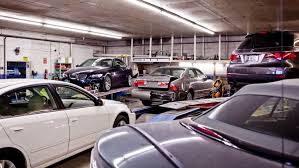
Strategy
2
Supplanting a Distributor Cap and Rotor
Picture titled Repair Your Own Car Without Experience Step 8
1
Find the wholesaler top underneath the vehicle’s hood. Open the hood and search for round, normally dim or dark bit of plastic close to the focal point of the motor compartment. The top looks somewhat like a crown with thick, dark links associated with the spokes on top. These are the sparkle plug wires that power the engine.
Allude to the proprietor’s manual in the event that you need assistance finding the top.
On the off chance that the top or rotor look worn or split, they should be supplanted immediately.
Picture titled Repair Your Own Car Without Experience Step 9
2
Slacken the clasps or screws on the top. Look at the top’s side to discover how it is associated with the vehicle. Regardless of what vehicle you have, the top will be generally simple to expel. In the event that it connects with cuts, dismantle the clasps up to free the top. On the off chance that you see fastens holding it place, you will require a Phillips-Head screwdriver to turn them counterclockwise.
Some wholesaler tops have neither cuts nor screws. For this sort of top, push down on it and pivot it counterclockwise until it falls off.
Abstain from pulling the sparkle plug wires off the top immediately. These wires should be joined to explicit pieces of the top, so they must be taken care of with alert or else they can over-burden the vehicle’s electrical framework.
Picture titled Repair Your Own Car Without Experience Step 10
3
Slide the rotor off of the merchant lodging to supplant it. The rotator will be directly underneath the wholesaler top in the motor compartment. It would seem that a little fan cutting edge. In the first place, check it for screws. Most rotors aren’t dashed set up, so you can for the most part evacuate it with power alone. Squirm the rotor to and fro until it falls off, at that point slide the upgraded one solidly in place.
On the off chance that your rotor has a screw, the screw will be on the pole, underneath the cutting edge. Expel it cautiously so it doesn’t fall into the motor.
Turn the rotor by hand after you supplant it to guarantee it turns openly.
Picture titled Repair Your Own Car Without Experience Step 11
4
Move the sparkle plugs from the old top to the new top. Set the merchant tops down on a level surface, arranging them so they seem to be indistinguishable. For help, check the old top. It ought to have a stamping like “#1,” showing the primary sparkle plug. Start with the main flash fitting, pull it off of the old top, push it onto the comparing talked on the new top, at that point rehash this with the remaining plugs.
Work gradually and ensure the fittings connect to the best possible spokes. On the off chance that the fittings are out of request, you could wind up making electrical harm your vehicle.
Picture titled Repair Your Own Car Without Experience Step 12
5
Supplant the top on the wholesaler get together. Set the top back in the motor compartment, ensuring it is similarly situated the old top was in before you evacuated it. The flash attachment lines should be tucked perfectly into the compartment, review them to guarantee they aren’t wound or bundled up by any means. At the point when you’re prepared, secure the top with any clasps or screws you fixed earlier.
In the event that the sparkle plugs are bowed or generally blocked, your vehicle’s frameworks may not get sufficient power.
Picture titled Repair Your Own Car Without Experience Step 13
6
Start the vehicle to check whether it runs easily. Fizzles or reverse discharges are an indication that the top and rotor aren’t situated effectively. Close down the vehicle so you can take another take a gander at them.
Strategy
3
Introducing a New Fuel Filter
Picture titled Repair Your Own Car Without Experience Step 14
1
Find the fuel channel close to the fuel tank. There are 2 better places the fuel channel can be, so you may need to do a bit of looking. The most well-known area is underneath the vehicle, directly beside the fuel tank. In certain vehicles, the fuel channel is in the motor compartment. Open the hood and check whether you can spot it underneath the dashboard.
The fuel channel is a round canister with 2 spokes standing out the sides. The vehicle’s fuel line hoses interface with the spokes. The canister itself is frequently dark, dim, or orange.
Allude to your proprietor’s manual
This is an example post, originally published as part of Blogging University. Enroll in one of our ten programs, and start your blog right.
You’re going to publish a post today. Don’t worry about how your blog looks. Don’t worry if you haven’t given it a name yet, or you’re feeling overwhelmed. Just click the “New Post” button, and tell us why you’re here.
Why do this?
The post can be short or long, a personal intro to your life or a bloggy mission statement, a manifesto for the future or a simple outline of your the types of things you hope to publish.
To help you get started, here are a few questions:
You’re not locked into any of this; one of the wonderful things about blogs is how they constantly evolve as we learn, grow, and interact with one another — but it’s good to know where and why you started, and articulating your goals may just give you a few other post ideas.
Can’t think how to get started? Just write the first thing that pops into your head. Anne Lamott, author of a book on writing we love, says that you need to give yourself permission to write a “crappy first draft”. Anne makes a great point — just start writing, and worry about editing it later.
When you’re ready to publish, give your post three to five tags that describe your blog’s focus — writing, photography, fiction, parenting, food, cars, movies, sports, whatever. These tags will help others who care about your topics find you in the Reader. Make sure one of the tags is “zerotohero,” so other new bloggers can find you, too.

 repair a car